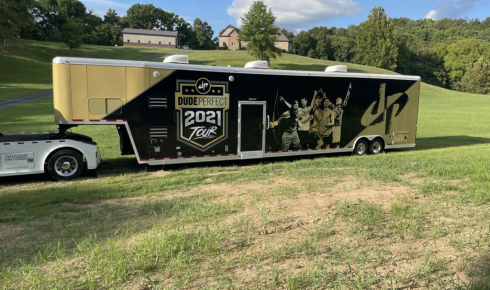
There’s something oddly mesmerizing about a trailer on the highway. Maybe it’s the sheer size of it, or the way it moves — steady, deliberate, almost patient. You don’t rush a trailer. You notice it, even if just for a second longer than usual.
And that extra second? That’s where something interesting happens.
When Space Turns Into Opportunity
Most vehicles offer limited room to communicate. A door panel here, a back window there. But trailers… they’re different. They give you space — real space — to say something meaningful without cramming it all in.
That’s one reason trailer wraps have started getting so much attention. They turn that long, uninterrupted surface into a kind of moving canvas. Not just for logos, but for stories, visuals, even a bit of personality.
It’s not about filling every inch. It’s about using that space wisely. Sometimes a single bold visual, stretched across the length of a trailer, can do more than a cluttered design ever could.
The Power of Being Seen — Slowly
Unlike smaller vehicles that pass by in a flash, trailers tend to linger in your field of view. They move slower, they stop more often, they stay in sight longer.
And that changes everything.
You’re not just glancing at them — you’re actually taking them in. Reading a line or two. Noticing the colors. Maybe even remembering the name without realizing it.
That’s where this form of branding becomes quietly effective. It doesn’t demand your attention. It gives you just enough time to notice, process, and move on.
Personalization That Feels Intentional
There’s a difference between something that looks designed and something that feels designed. You can tell when thought has gone into it.
That’s what sets custom trailer wraps apart. They aren’t just scaled-up versions of smaller designs. They’re built specifically for that large, unique surface.
Maybe it’s a sweeping graphic that flows from front to back. Maybe it’s a minimal design that lets the size speak for itself. Either way, it’s intentional.
And people notice intention — even if they can’t quite explain why.
Designing for Distance and Motion
Creating a strong trailer wrap design isn’t as simple as making something look good up close. In fact, most people will never see it that way.
They’ll see it from a distance. At an angle. Maybe while driving alongside it for a few seconds. So the design has to work under those conditions.
That means bold shapes, clear typography, and colors that hold up in different lighting. Fine details? They often get lost. Simplicity becomes your best friend.
It’s almost like designing for a billboard that moves — but with more variables to consider.
The Unexpected Practical Benefits
There’s also a side to trailer wraps that doesn’t get talked about much: protection.
Long-haul travel can be tough on a trailer’s exterior. Sun exposure, dust, minor abrasions — over time, it takes a toll. A wrap acts as a protective layer, absorbing some of that wear and tear.
It’s not the main reason people invest in wraps, but it’s a welcome bonus. Especially for businesses that rely on keeping their fleet in good condition.
A Different Kind of Marketing Rhythm
Most marketing today feels fast. Campaigns launch, run, end. Ads appear, disappear. There’s a constant need to refresh, update, optimize.
Trailer wraps don’t follow that rhythm.
They’re slower, steadier. Once they’re out there, they keep doing their job without much intervention. No clicks to track, no impressions to chase. Just consistent visibility over time.
And in a way, that consistency feels refreshing. Almost old-school, but in a good way.
The Human Side of It All
Behind every trailer is a business, and behind every business are people trying to make something work.
Wrapping a trailer is, in some sense, an extension of that effort. It’s saying, “This is who we are. This is what we do.” Not loudly, not aggressively — just honestly.
And when people see that same trailer again and again, something builds. Familiarity. Recognition. Maybe even a bit of trust.
Closing Thoughts
We don’t always realize how much of our environment we absorb. The vehicles we pass, the designs we notice, the names that quietly stick in our minds.
Trailers, with their long surfaces and steady presence, have a unique way of leaving those impressions behind.
They don’t need to shout. They just need to show up — again and again — on roads, in traffic, in the everyday moments we barely think about.
And somehow, that’s enough.